
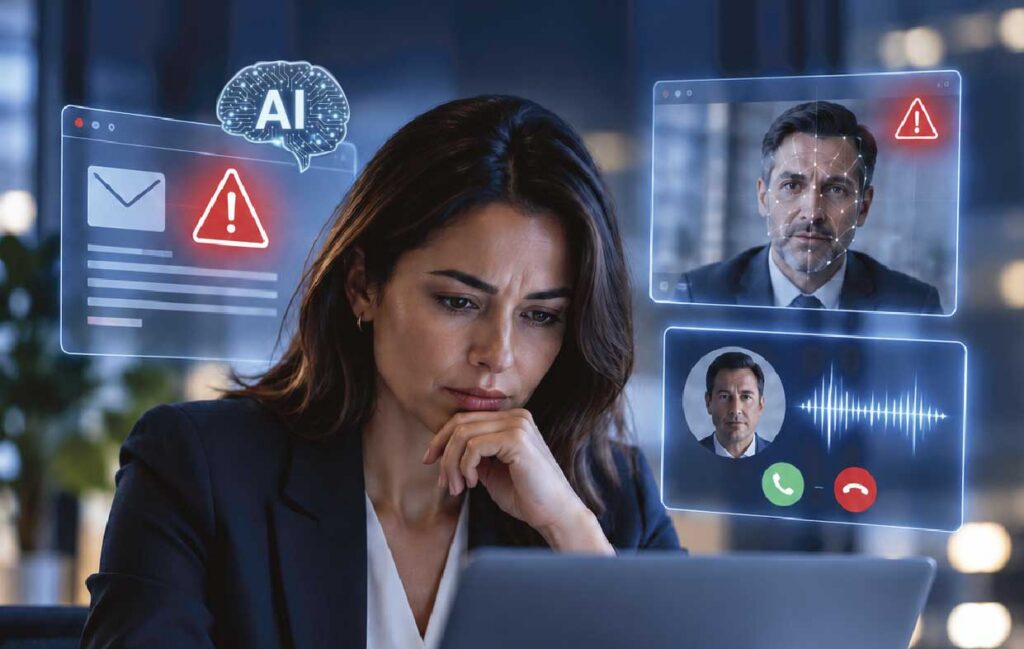
Remember when a suspicious email was easy to spot? Misspelled words, awkward sentences, and questionable graphics were often telltale signs of a scam. Today, those warning signs aren’t nearly as reliable.
Artificial intelligence (AI) is changing the way cybercriminals operate, giving them new tools to make traditional scams more sophisticated and difficult to recognize. These AI cyber scams pose growing risks as holiday shopping and online activity increase, creating more opportunities to take advantage of busy or distracted users.
But the risks extend well beyond holiday shopping. Businesses and schools face the same threats through everyday communications and financial transactions, making it more important than ever to recognize how cybercrime is evolving.
AI Is Making Scams More Convincing
Cybercriminals have long relied on relied on phishing emails and fraudulent links to trick people into sharing sensitive information or sending money. AI is enhancing these familiar tactics while creating new opportunities to deceive unsuspecting users.
Scammers can now generate realistic emails and text messages, personalize fraudulent requests, create convincing websites and chatbots, and even imitate someone’s voice. These capabilities allow cybercriminals to reach people in more ways and make their attempts increasingly believable.
The challenge is that a scam no longer needs to look or sound suspicious to be dangerous. Familiar names and professional communications can create a false sense of security while putting sensitive information, money, and systems at risk.
That Email Looks Legitimate, But Is It?
Imagine receiving an email from a trusted vendor explaining that their payment information has changed. The company logo looks correct, the language is professional, and the sender’s name is familiar. Would you question it?
AI makes it easier for criminals to create fraudulent messages that resemble everyday business communications. A fake invoice, password reset notification, or urgent request from a supervisor may appear completely routine.
Instead of judging an email by its appearance, pay attention to unexpected requests, payment changes, and pressure to act quickly. Always verify sensitive requests using an established contact method before taking action.
Fake Websites Can Have Real Consequences
Holiday shopping brings a flood of promotional emails, advertisements, and delivery notifications. Cybercriminals take advantage of this activity by creating fraudulent websites that imitate familiar retailers, financial institutions, and delivery services.
AI can help scammers produce convincing website content and product descriptions that appear to come from legitimate businesses. A fake site may feature recognizable branding and appealing prices while attempting to collect payment information or account credentials.
Visit websites through trusted links, entering their known addresses directly, or using trusted bookmarks rather than following unexpected links. Check domain names carefully, research unfamiliar sellers, and be cautious of offers that seem too good to be true.
These precautions also apply to business portals, vendor websites, and online services used by schools.
When Cybercriminals Pretend to Be Someone You Trust
Cybercriminals may pose as executives, coworkers, vendors, school administrators, or technical support representatives. AI-generated messages and voice-cloning technology can make these impersonation attempts especially convincing.
Imagine receiving a phone call that sounds like your supervisor requesting an urgent payment or confidential document. The voice seems familiar, and the request sounds important. Would you recognize an AI-generated impersonation?
When a request involves money, credentials, or sensitive information, confirm it through a previously established contact method – not the phone number or link provided in the suspicious communication.
One Click Can Put More Than Your Shopping at Risk
The line between personal and professional technology use isn’t always clear. Employees may shop online during a break, access personal email on a work device, or reuse passwords across multiple accounts.
A fraudulent shopping website or phishing message could expose more than personal information. Compromised devices or stolen credentials may give attackers opportunities to access workplace systems and sensitive organizational data.
For schools and businesses, this reinforces the importance of clear device-use policies, unique passwords, multifactor authentication (MFA), and ongoing employee awareness.
Personal online habits can have professional consequences, making cybersecurity everyone’s responsibility.
Verification Is Your Best Defense
As scams become more convincing, recognizing them requires a shift in thinking. Rather than relying on obvious mistakes or suspicious appearances, make verification part of your everyday routine.
A few consistent habits can significantly reduce risk:
- Pause before responding. Be cautious of urgent or unexpected requests.
- Verify the source. Use a phone number or communication channel you already trust.
- Check links and website addresses. Watch for subtle differences in domain names.
- Protect your credentials. Use unique passwords and MFA, and never share verification codes.
- Report suspicious activity. Notify your IT team promptly about questionable messages or interactions.
These precautions help protect you whether a scam was created using AI or more traditional methods.
Cybersecurity Takes More Than Awareness
Employees play an important role in protecting an organization, but awareness alone isn’t enough. Effective cybersecurity requires layered defenses, proactive monitoring, and a plan for responding when threats arise.
At Spera Partners, we help businesses and schools assess vulnerabilities, implement appropriate protections, and manage cybersecurity risks through our Strategic IT Consulting and Managed IT Services.
Solutions like advanced email filtering, multifactor authentication, endpoint security, and managed detection and response (MDR) provide critical layers of protection that help prevent attacks, detect suspicious activity, and limit potential damage.
Combining these technologies with employee education creates a stronger, more proactive approach to cybersecurity.
Stay One Step Ahead of the Scam
AI is making cyber scams harder to recognize, but vigilance, verification, and layered security remain essential.
Spera Partners helps businesses and schools reduce risk and protect their people, information, and operations through customized cybersecurity solutions.
Let’s talk about strengthening your organization’s cybersecurity. Contact an Account Manager today or schedule a free consultation for Businesses here or for Schools here.
When IT runs better, everything runs better.
Beyond IT. Peace of Mind, Redefined.
For more information on AI, check out our AI Blogs.
For more information on Cybersecurity, check out our Cybersecurity Blogs.